
Japanese Udon Noodles, How to Make and Different Types
Find out everything about Japanese udon noodles at japancentre.com, including what udon is, how it is made, and how it can be used in your cooking.

There are few traditional Japanese dishes more universally adored than Japanese udon noodles. One of the three main types of noodles eaten in Japan (alongside soba and ramen), udon noodles are made from wheat flour, salt and water, and are thick and chewy in texture when prepared correctly. As well as being an easy-to-use ingredient for home-cooked meals, there are also speciality udon bars and udon restaurants all over Japan and in other countries.
Udon noodles can be served in a variety of different ways, the most common being in the form of a hot noodle soup, where prepared udon noodles are served in a savoury broth with various meat, protein, and vegetable garnishes placed on top.
Other ways of serving udon include cold on a zaru tray with tsuyu dipping sauce and other garnishes, hot as part of a nabe hot pot, or in a yakiudon stir fry. There are also certain udon dishes that are considered specialities in different parts of Japan.
Some even combine udon noodles with Japanese curry to make a soul food classic, curry udon.
Find out more about this most delicious of Japanese noodles, what sort of dishes can be made using udon noodles and what are some of the different regional udon dishes here.
Shop udon noodlesTypes of udon
Here are some of the most common ways of serving udon noodles.
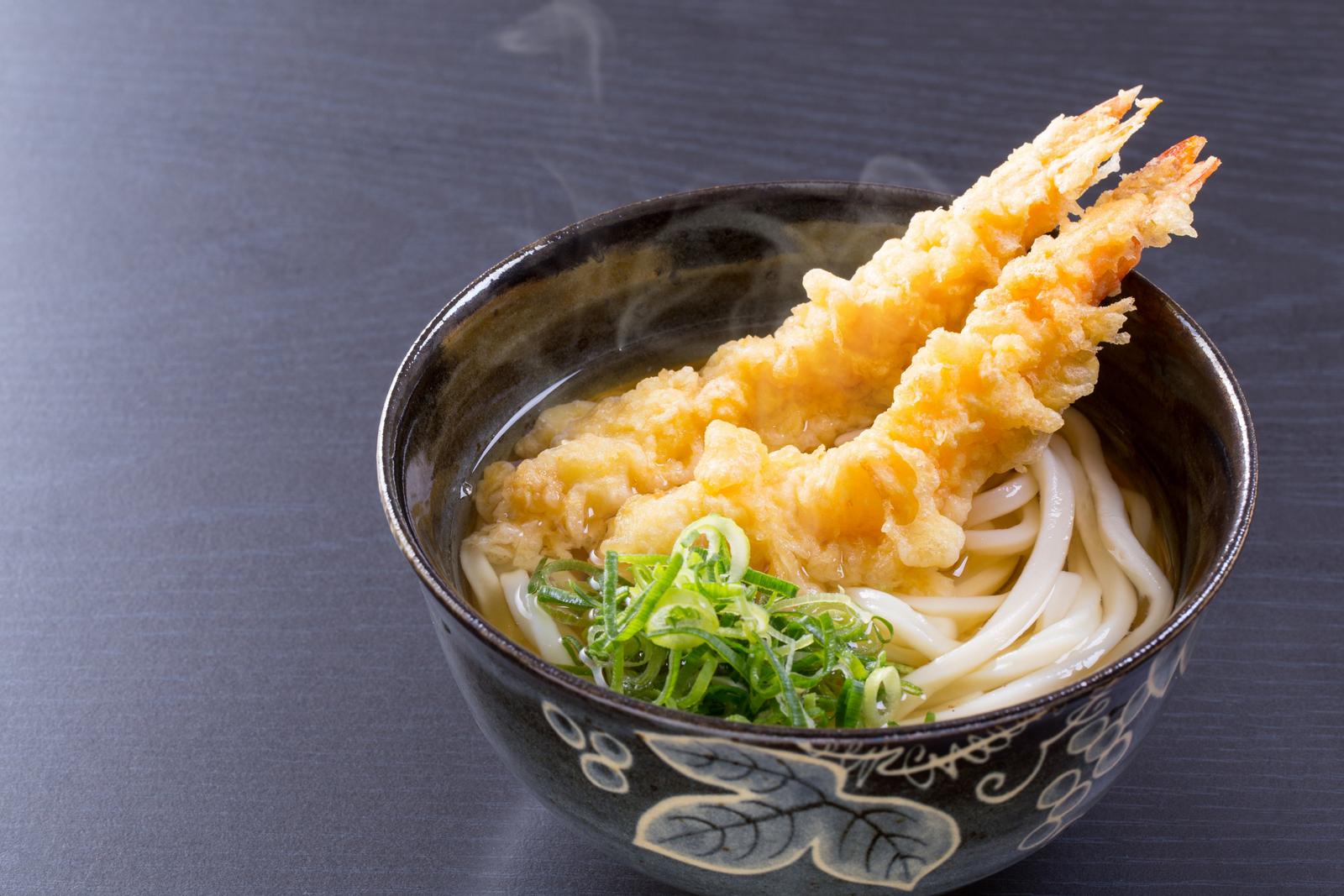
Hot udon soup
The most common way to serve udon, hot udon soup is any dish where udon noodles are served in a hot savoury broth called kakejiru, which is made from a mixture of soy sauce, dashi stock, and mirin rice wine. This noodle soup is then topped with several meat, protein, or vegetable toppings, some of the most common of which being chopped spring onions, tempura prawns, deep fried tofu pockets (known as abura age in Japanese), and slices of kamaboko (a type of fish cake shaped like a semi-circle).
Many hot udon soups have unique names depending on their toppings, including:
- Kake Udon: topped with chopped spring onions and sometimes a slice of kamaboko.
- Kitsune Udon: translated as ‘fox udon’, this udon is topped with a piece of abura age.
- Tanuki Udon: translated as ‘raccoon dog udon’, this udon is topped with tempura batter pieces.
- Tsukimi Udon: translated as ‘moon-viewing udon’, this udon is topped with a raw egg, which cooks in the hot soup and looks like a full moon.
- Chikara Udon: translated as ‘strength udon’, this udon is topped with toasted mochi rice cakes.
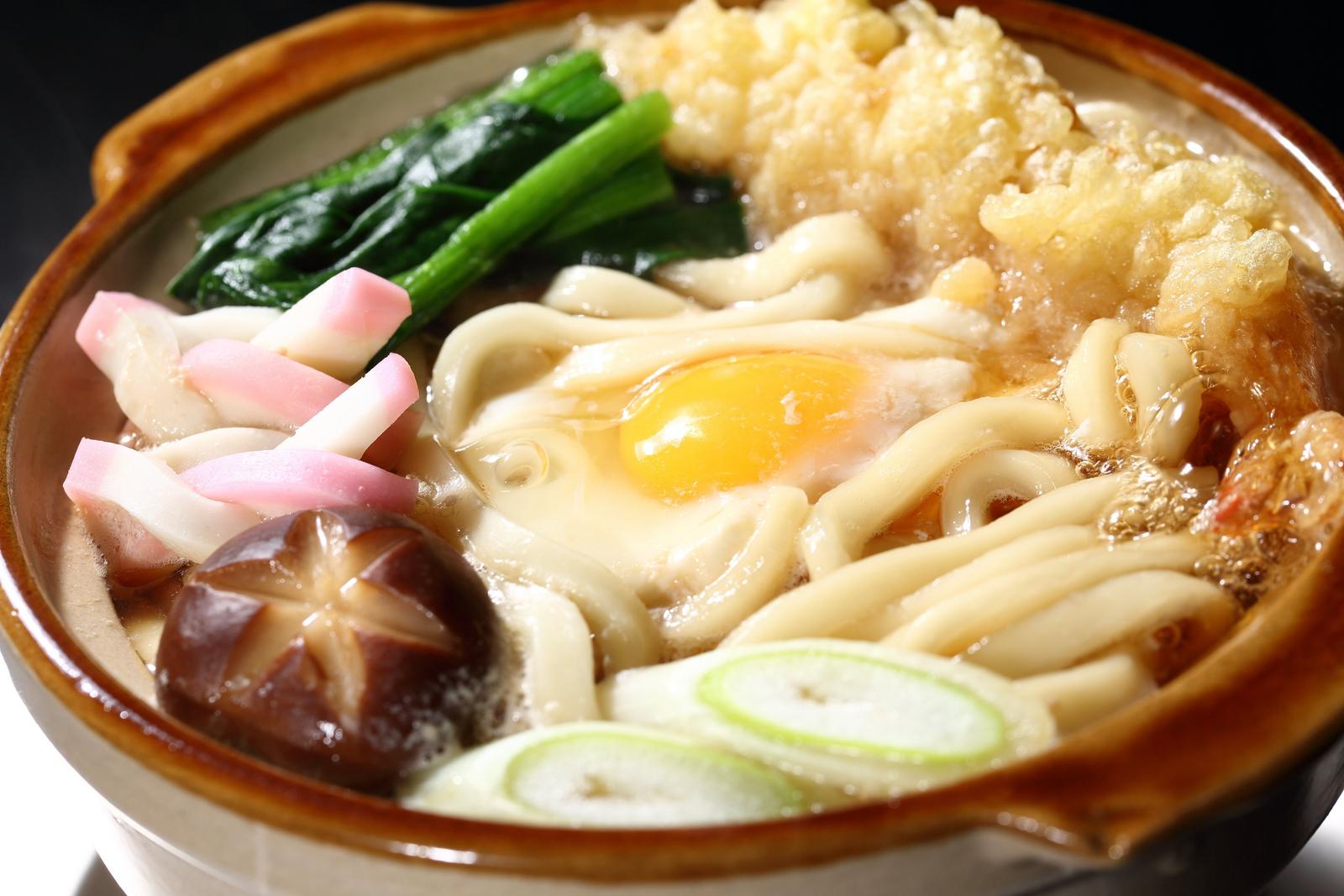
Nabeyaki udon
This is a special type of udon noodle soup, where udon noodles, a kakejiru broth seasoned with miso, soy sauce, kimchi, and/or other savoury seasonings), and various meats and vegetables (the most common of which include mushrooms, spinach, carrot, chicken, and kamaboko fish cake), are cooked together in a nabe hot pot or saucepan, then topped with other toppings that need to be prepared separately, such as freshly fried prawn tempura or blanched spinach leaves.
Nabeyaki udon is a more complex dish than most udon dishes, and particularly ideal if you are after something with lots of different flavours.
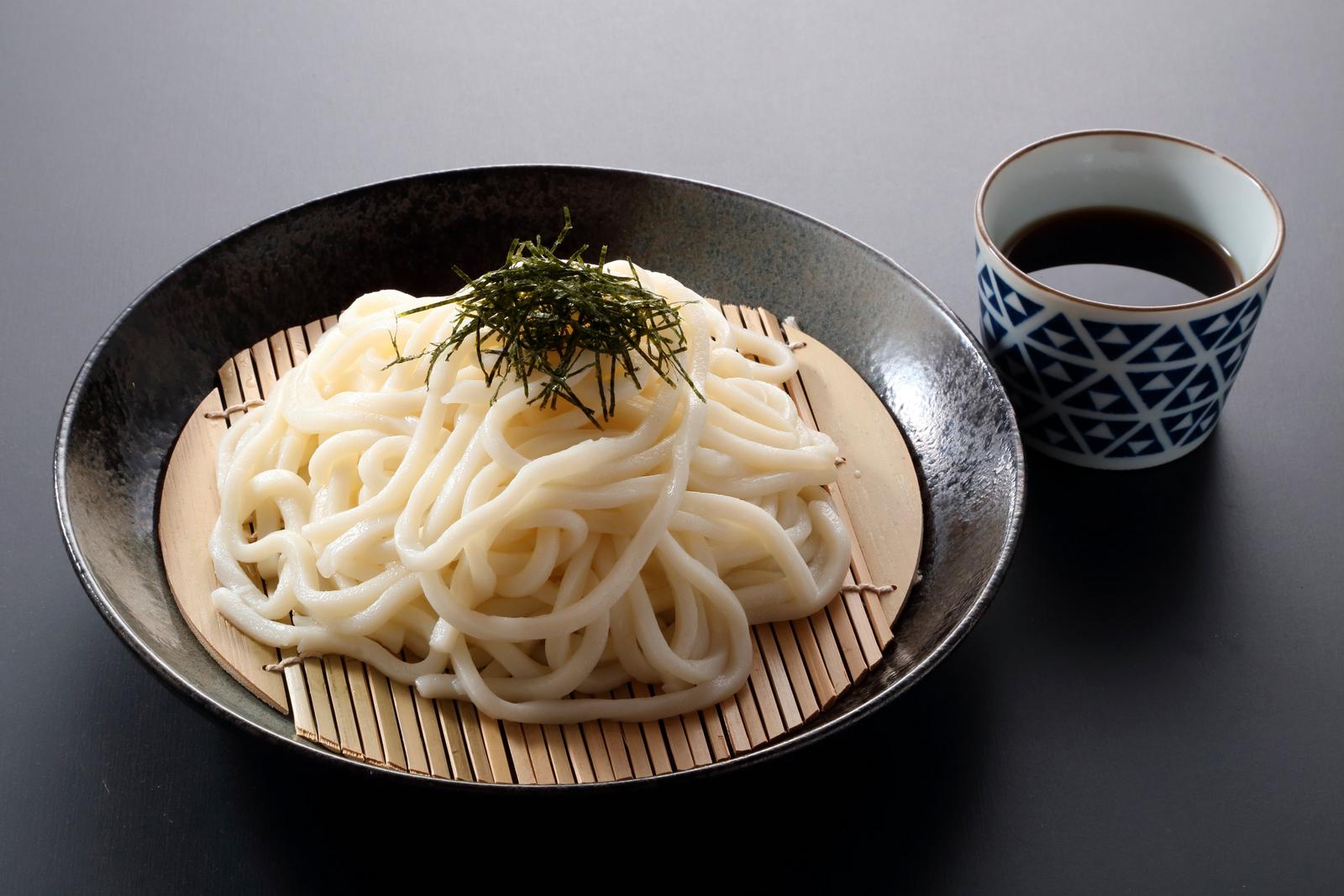
Zaru udon
A favourite summer dish, zaru udon is so named because of the bamboo tray (called a zaru) upon which the udon is placed. Udon noodles are prepared as normal before being cooled by rinsing in cold water. The noodles are then placed on a zaru tray, which has spaces between the bamboo sticks that act like a drain for any excess water. This cold udon is served with a dipping sauce called tsuyu, which is made of mirin, soy sauce, and very concentrated dashi stock. Additional garnishes, including chopped spring onions, sliced ginger, and wasabi, may also be served alongside zaru udon in separate sauce dishes.
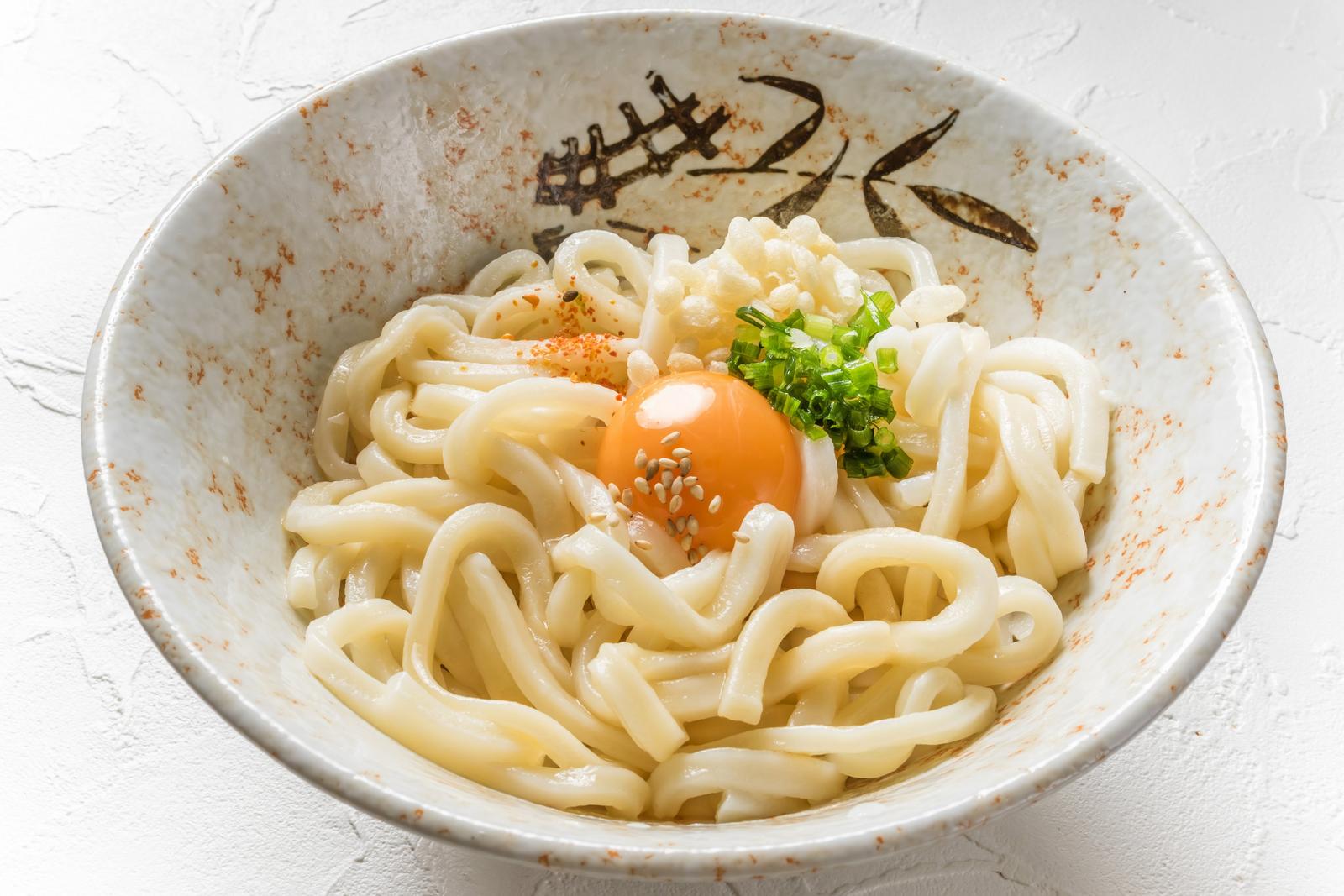
Bukkake udon
Another great udon dish for enjoying during the summer. Bukkake refers to any dish that is made by pouring a broth over something. Bukkake udon is made by preparing cold udon noodles, adding them to a large noodle bowl, and pouring cold tsuyu over them in a similar ratio to pouring milk over cereal. A variety of garnishes can then be added on top, the most popular of which being chopped spring onions, boiled eggs, grated mooli (or daikon) radish, bonito fish flakes, nori seaweed, and tempura batter pieces.
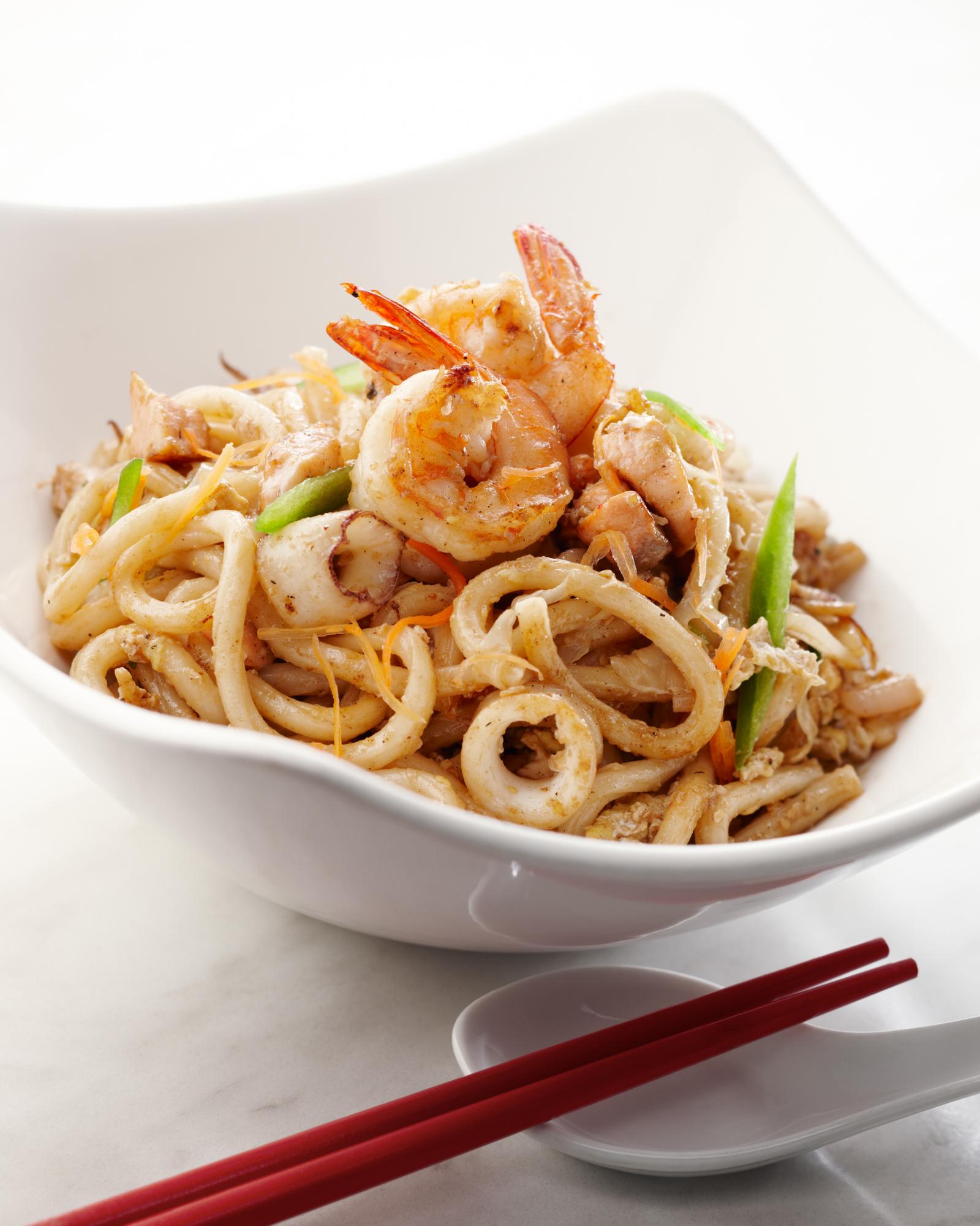
Yaki udon
This udon dish is very similar to yakisoba (a summer barbecue favourite in Japan) except that udon noodles are used instead of the egg noodles used in yakisoba. To make yakiudon, udon noodles are added to a wok or hot plate with sliced meats and/or vegetables (popular choices for which include prawns, carrot, cabbage, and pork) and a barbecue sauce, and then barbecued until the meats and/or vegetables have cooked. Yakiudon is then often topped with pickled ginger or bonito fish flakes before serving.
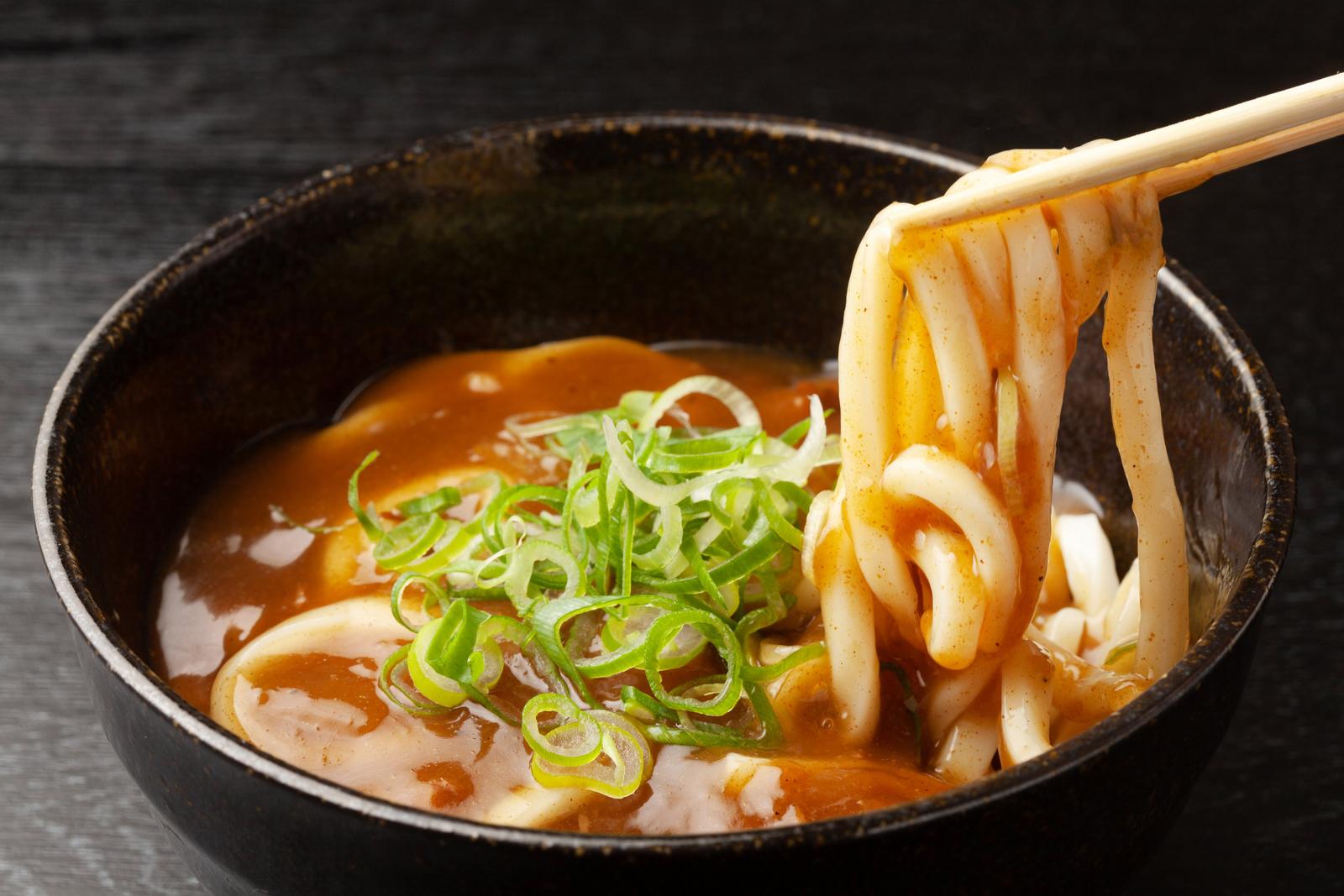
Curry Udon noodles
Curry udon is a popular Japanese dish that delightful fusion of traditional and modern Japanese cooking features udon noodles bathed in a flavourful blend of Japanese curry sauce and tsuyu, creating a satisfying noodle soup reminiscent of the rich flavours found in katsu curry. Enjoy this simple yet flavourful noodle dish when you're pressed for time but crave a hearty and delicious meal.
Udon specialities
Udon noodle dishes are widely available all over Japan, and there are some dishes that are only available in particular regions of Japan. Here are a couple of the most noteworthy regional udon dishes.
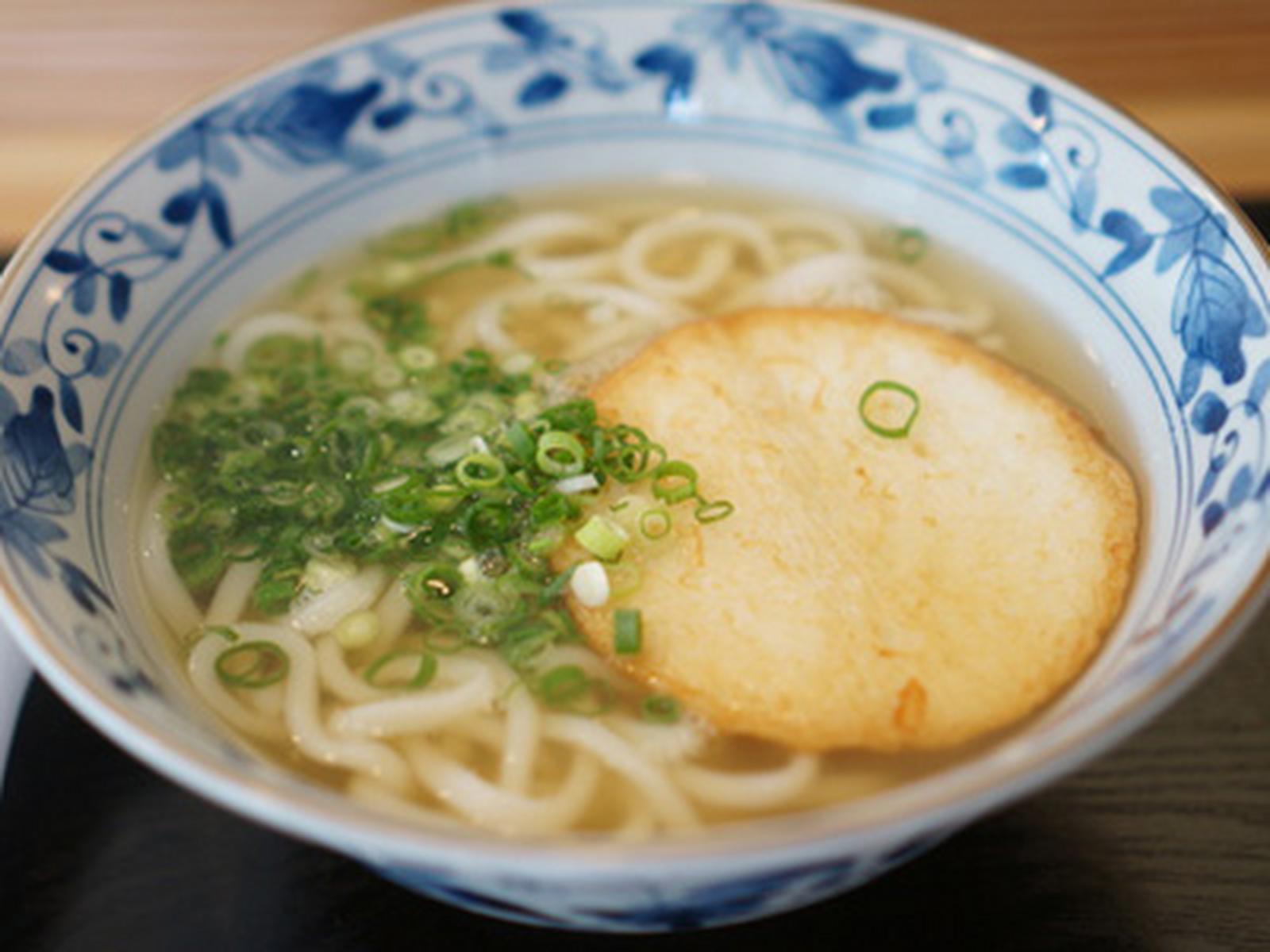
Hakata udon, from Hakata
It is widely believed that Hakata, in Fukuoka prefecture, was one of the first places in Japan to start producing udon, with the early udon-making practitioners in Hakata claiming to make their noodles based on the recipe provided by Enni, the Buddhist monk who originally introduced flour milling to Japan.
Hakata udon is known for being thick and soft in texture. It is traditionally served in a broth of dashi and light soy sauce, with toppings of burdock tempura, surimi fish paste, and/or meat slices.
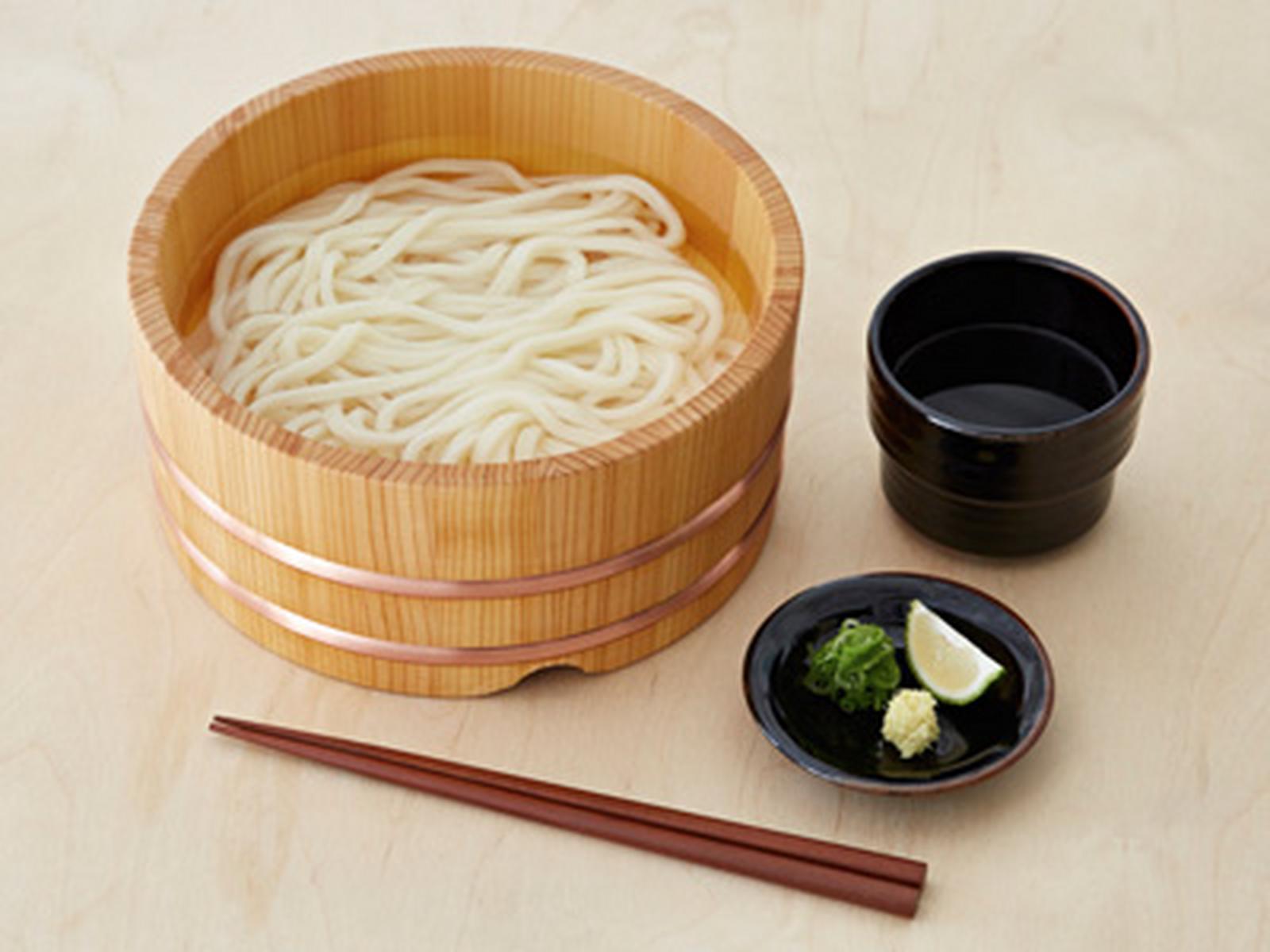
Sanuki udon, from Kagawa
Sanuki udon is one of the most famous varieties of udon in Japan. Originally from Kagawa Prefecture (previously known as Sanuki Prefecture) in Shikoku, it is the uniquely firm, chewy texture of Sanuki udon that makes it so popular. To achieve this texture requires the use of a special kind of wheat that was originally cultivated in Kagawa/Sanuki. While still considered a Kagawa speciality, Sanuki udon is now widely available all over Japan.
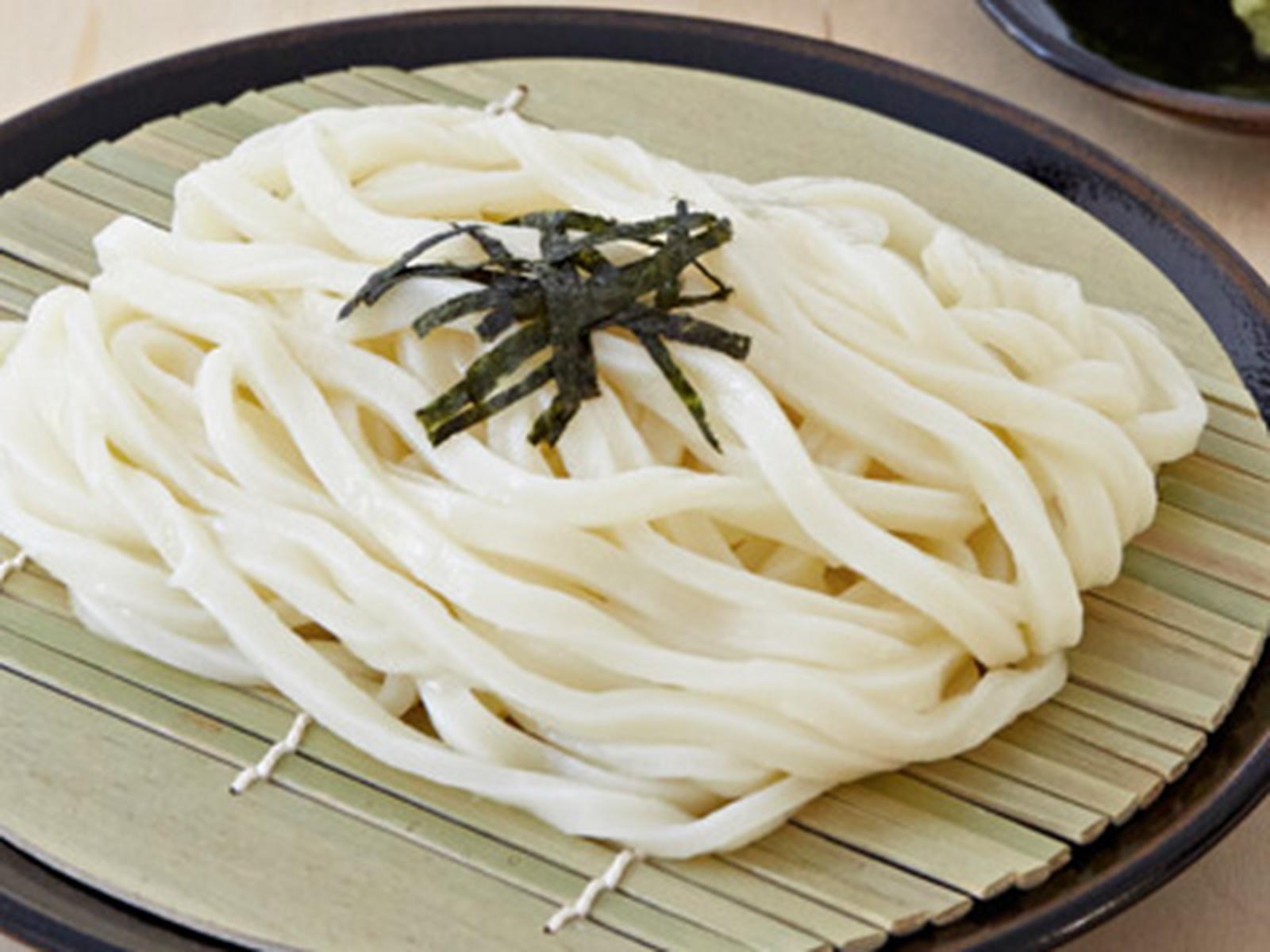
Mizusawa udon, from Gunma
Above all else, Japanese food is about using the best ingredients. Mizusawa Udon, a speciality of Gunma prefecture, is considered to be one of the three most delicious varieties of udon in all of Japan. Made from Gunma wheat flour, pure water, and specially selected salt, mizusawa udon noodles are firm, thick, and turn out slightly transparent when cooked. To enjoy these udon at their full capacity, they are best served cold as zaru udon.
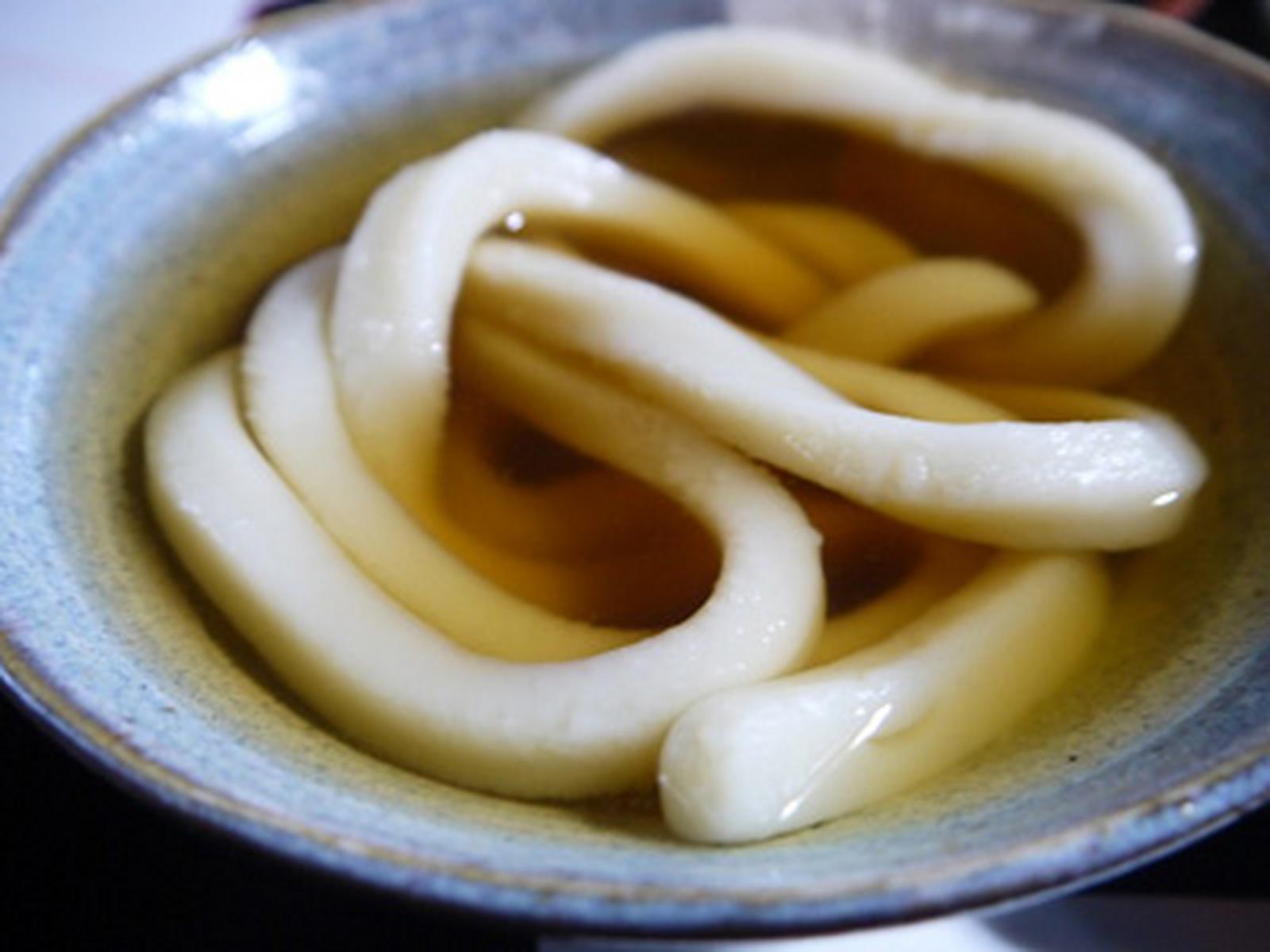
Ippon udon, from Kyoto
Normally when one asks for a bowl of udon, one can expect to find more than one udon noodle in the bowl. In Tawaraya, a famous noodle house in Kyoto, however, a bowl of udon contains just one very thick, incredibly long udon noodle in a simple and lightly seasoned kakejiru soup. As this long udon noodle is even thicker than standard udon, with a chewy texture reminiscent of dango or mochi rice cakes, eating it requires a fair amount of chewing. This udon is famous throughout Kyoto, and because Tarawaya makes their udon fresh every morning, it is not uncommon for them to run out before the end of the day. Once you have mastered the art of udon-making, perhaps you should set yourself the challenge of making an Ippon Udon.
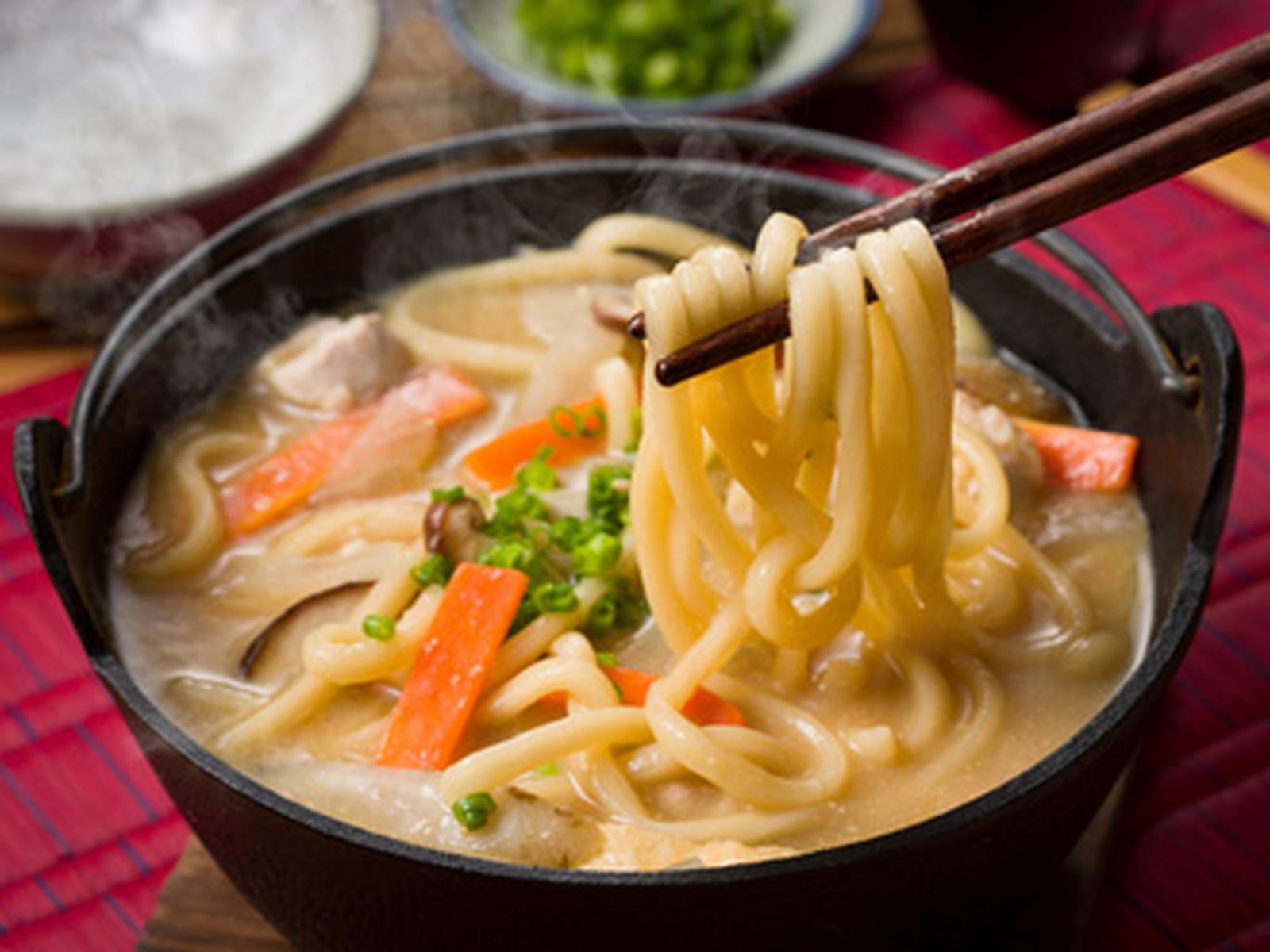
Miso-Nikomi udon, from Aichi
This udon noodle dish is a well-known delicacy in Nagoya and the surrounding regions of Aichi prefecture. Similar to nabeyaki udon, miso-nikomi udon is made by diluting Hatcho miso (a Nagoya speciality) with dashi stock in a nabe hot pot or large saucepan, then adding firm udon noodles as well as various meats and vegetables (with chicken, mushrooms, fishcakes and leeks being particularly common) and simmering slowly. A raw egg will be cracked into the middle of the udon 1-2 minutes before serving.
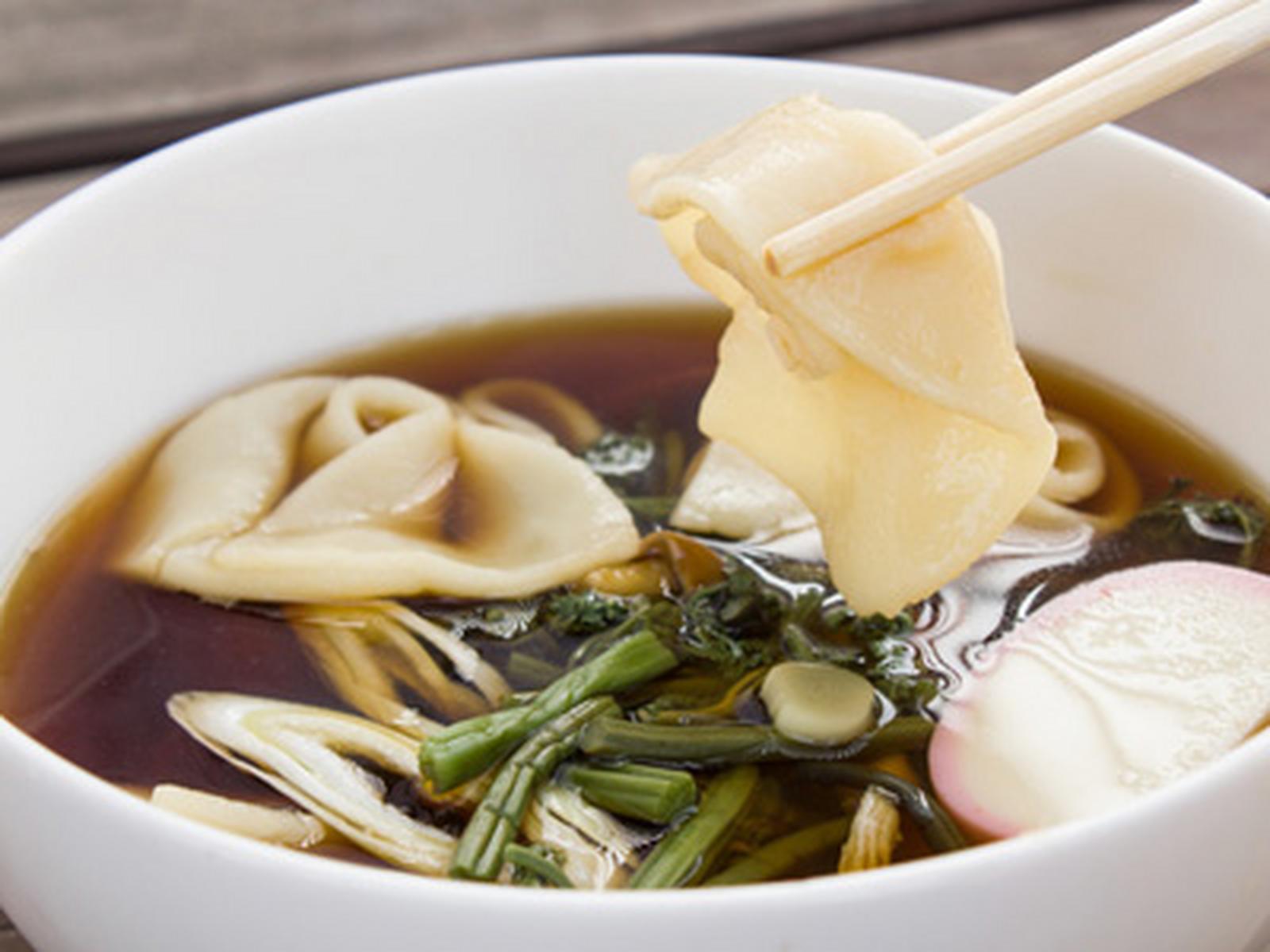
Mimiudon, from Tochigi
Most udon noodles are long and string-like in shape, similar to spaghetti. Mimiudon, however, are shorter, flatter noodles folded over in the middle to look a little like ears. Their name, mimiudon, literally means ‘ear udon’.
These unusually-shaped udon noodles are normally served in a hot udon soup with fish cakes, wakame seaweed, and other toppings. Their shape represents the ears of bad Shinto gods, and it is said that if these udon are eaten, the eater will be protected from the influence of the bad gods for a whole year.