
Different Types of Japanese Noodles & Recipes
Learn about udon, ramen, yakisoba, soba and more Japanese noodles and recipes.

What is Ramen?
If you have spent any time living in Japan or socialising with Japanese people, chances are that you are aware of how much Japan loves ramen. This humble noodle soup dish, consisting of thin wheat noodles, umami-rich soup broth, and assorted meat, vegetable, protein, and spice toppings, is widely considered to be one of present-day Japan’s national dishes and a cultural icon. Few Japanese dishes inspire as much regional variation (with local ramen dishes existing in just about every part of Japan) or intellectual interest (there is even a famous museum dedicated to ramen, located in Yokohama) as ramen, and the popularity of ramen continues to grow in Japan and around the world.
The origins of ramen are not entirely clear, but most of the available evidence indicates that it was a dish inspired by noodle soups (made from wheat noodles, savoury broth made from salt and pork bones, and some toppings) served by Chinese restaurants and portable food carts around the country. The first speciality ramen restaurant opened in Yokohama in 1910, selling what was known until the 1950s as shina soba, or Chinese soba. Shina soba became popular as a cheap and filling food among labourers, but its popularity diminished during World War II when food restrictions meant that making money by selling food was strictly prohibited. Thanks to the invention of instant ramen in 1958, followed by the post-war economic boom, ramen (now no longer known as shina soba) gradually built up its popularity again, and the swapping out of Chinese-style street vendors for up-scale specialist restaurants caused ramen to become increasingly associated with Japanese culture. Local ramen dishes started becoming available in the early 1980s, and Yokohama’s ramen museum first opened its doors in 1994.
These days ramen is available in every city, town, and village in Japan. Eighty percent of ramen shops are small businesses; speciality restaurants and bars serving their favourite variations of this highly versatile dish. Other countries around the world have also been swept up in the ramen hype, with speciality ramen restaurants opening in many major cities and not-so-major cities.
Learn about the different components in ramen, find out how to make your own fresh ramen noodles, and discover some of Japan’s most popular regional ramen dishes below.
Ramen noodles
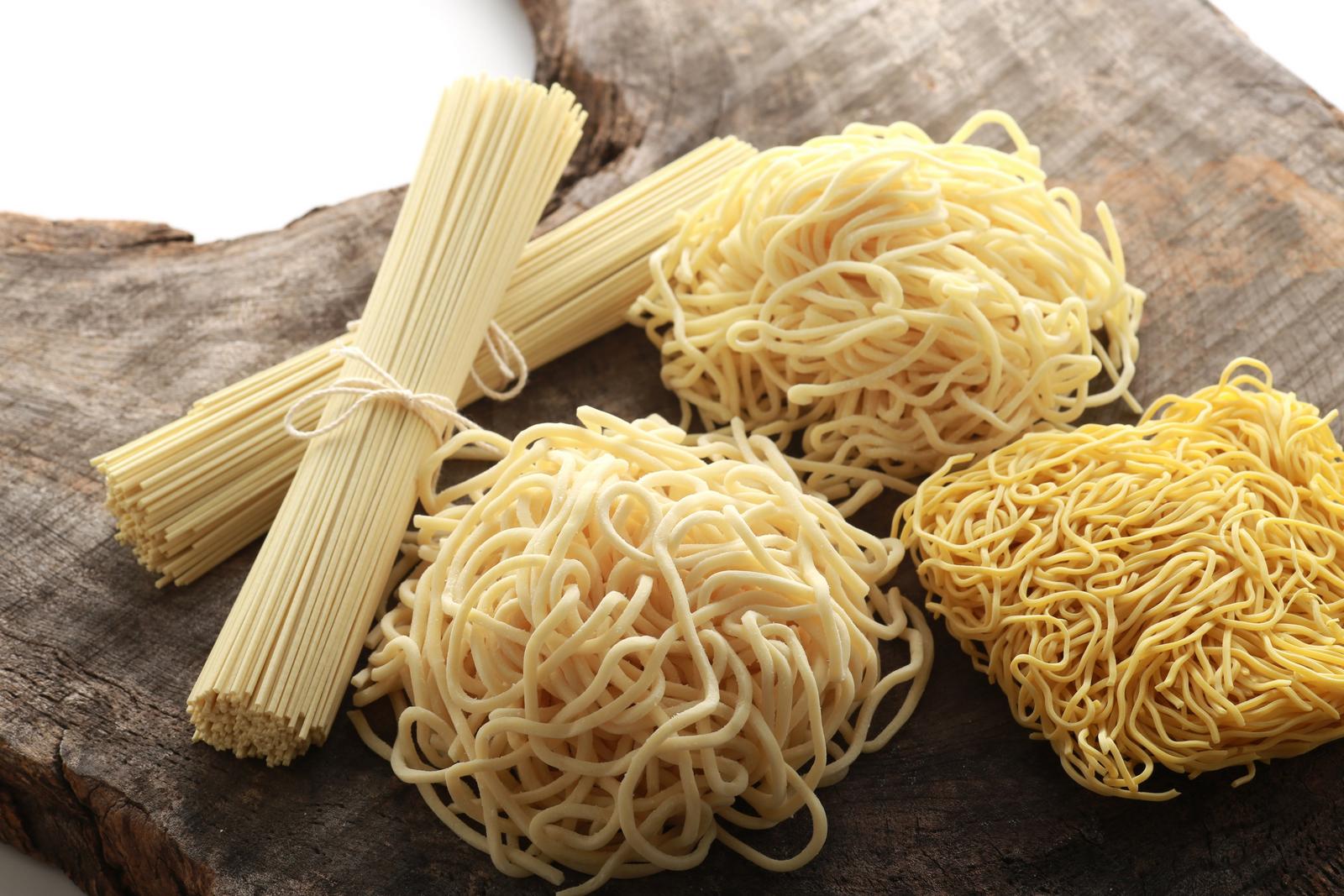
When most people think about ramen, the iconic, yellow, slippery noodles are what first spring to mind. Ramen noodles are one of the three most commonly used types of noodles in all of Japanese cuisine (along with udon and soba). Ramen noodles are made from a combination of wheat flour, salt, water, and kansui; alkaline water that contains sodium carbonate, potassium carbonate (usually) and a little phosphoric acid (sometimes).
The addition of kansui is the main criterion that separates ramen noodles from other types of Japanese noodle, and its use is what gives ramen noodles their distinct yellow tinge. The kansui also makes ramen noodles firmer in texture and less prone to absorbing moisture, meaning that they will not soften and break apart in hot noodle broths, as noodles made without kansui would. Some ramen noodle recipes substitute eggs for kansui, as eggs offer similar benefits.
The other unique characteristic with ramen noodles is their shape. While all udon and soba are usually very similar in size and shape, ramen noodles can be thick, thin, or flat like fettuccine. They can also be straight or curly. Certain varieties of ramen tend to prefer certain types of ramen noodle.
Ramen toppings
When presented with a bowl of freshly prepared ramen, the first thing you should notice is the colourful arrangement of meat, protein,vegetable, and spice toppings that will decorate the top of the ramen in an abstract yet aesthetically pleasing way. In theory, ramen can be topped with just about any savoury ingredient, but there are a handful of foods that get chosen more frequently than others.
Chashu pork
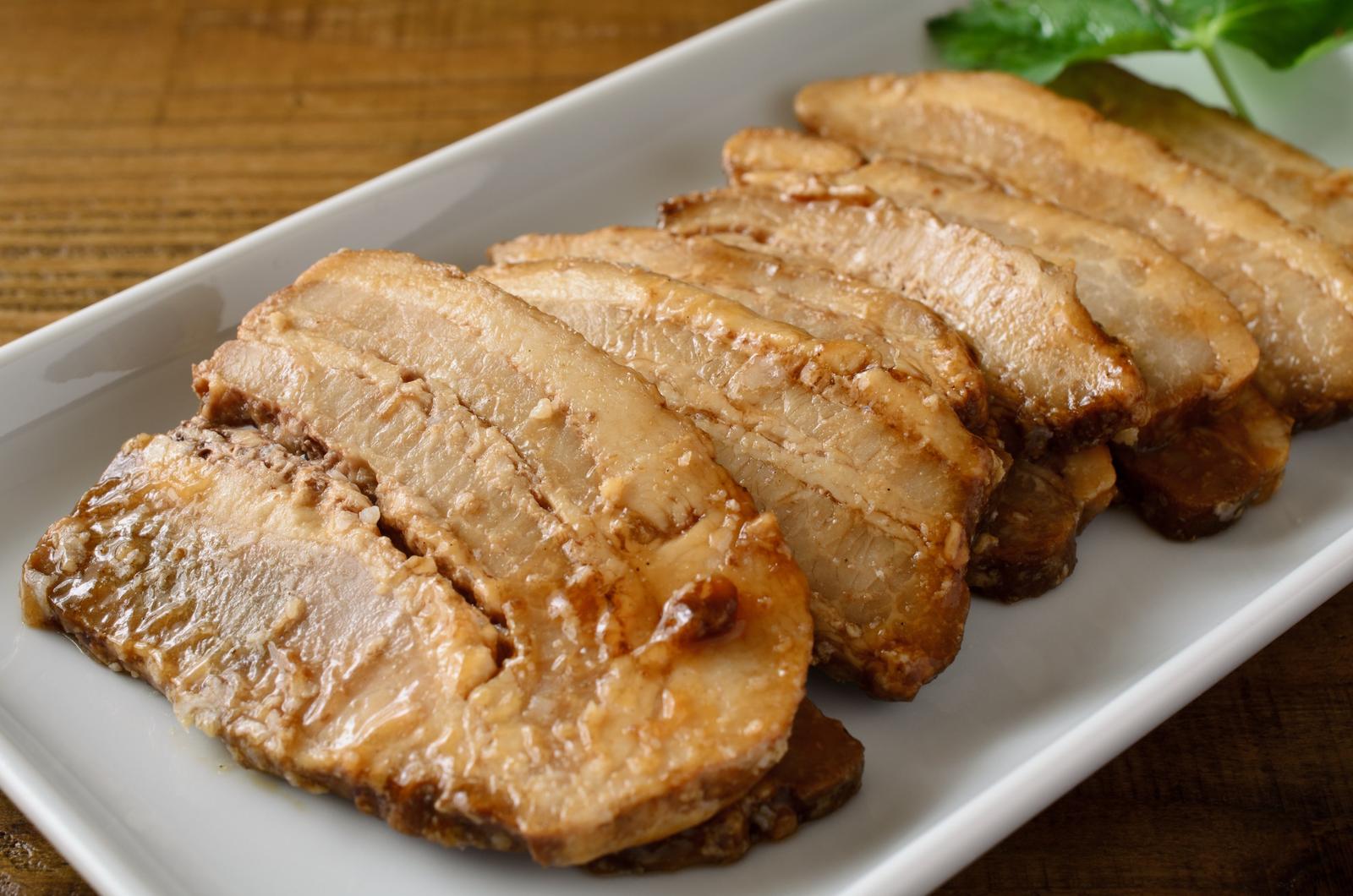
If you have ever received a bowl of ramen with several thin slices of slightly fanned out meat on the top, that meat was probably chashu pork. By far the most frequently used meat topping on most varieties of ramen, chashu pork is made by taking pork loin or pork belly and simmering it in a mixture of soy sauce and cooking sake until as tender as possible.
Boiled egg
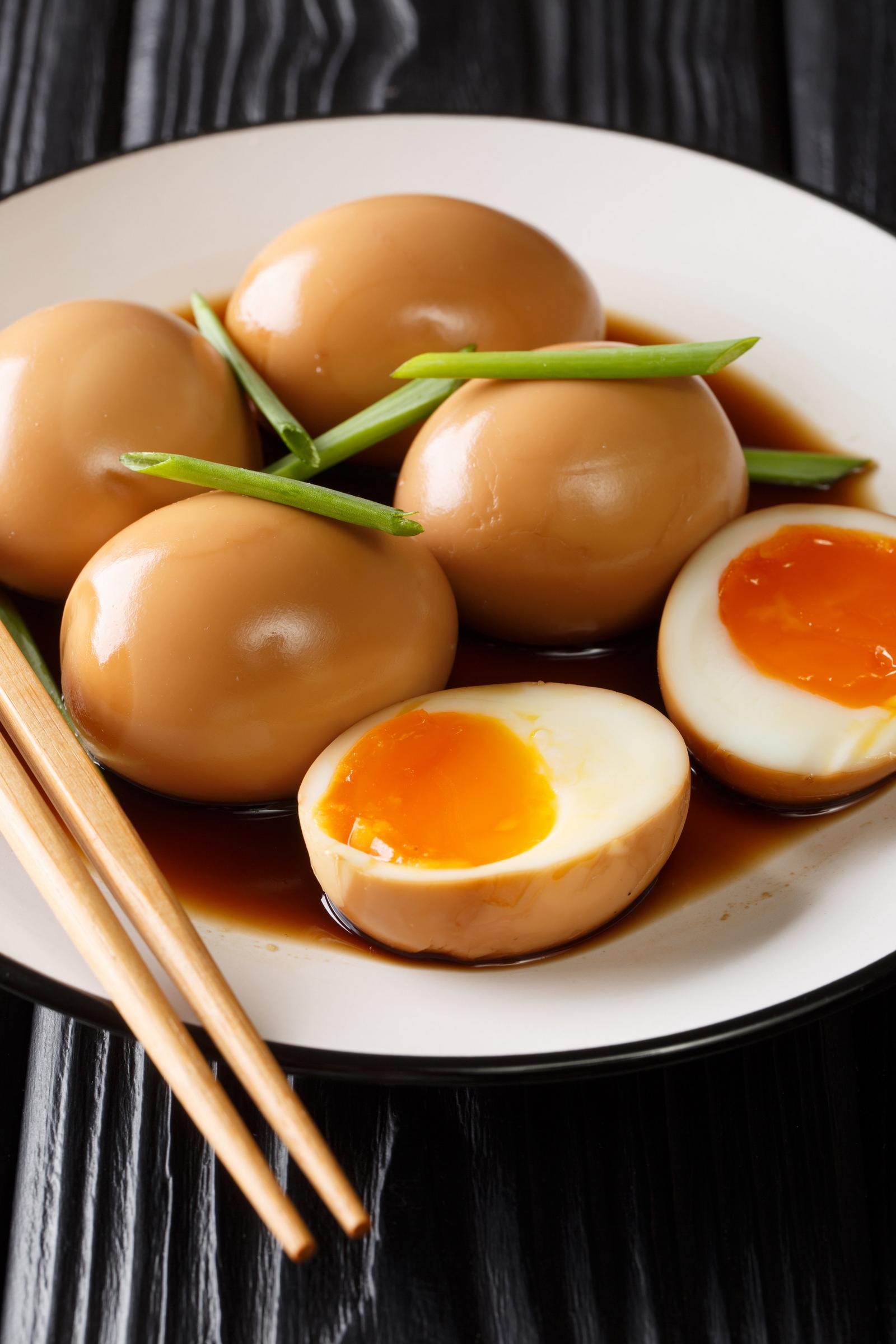
Most varieties of ramen come with half a boiled egg as one of their toppings. They will be either hard of soft boiled, and will often look slightly brown along the outside; the result of being marinated in soy sauce and mirin rice wine for a sweet/savoury nuance of flavour.
Spring onions
Also known as scallions, this little green onions are often chopped up and scattered over a ramen bowl. As well as lending their own strong flavour to a dish, they also add an element of crunchiness that is refreshing in a dish where most elements do not have any crunchiness to them.
Menma
Menma are bamboo shoots that have been dried (normally in the sun) and fermented in lactic acid before being seasoned with a combination of sweet and savoury seasonings, such as soy sauce, sugar, and sesame oil. They have a firmness of texture that contrasts nicely with the ramen noodles.
Nori seaweed
The deep green colour of nori seaweed provides a nice colour contrast with the lighter colours of most other ramen toppings. Nori served in ramen typically comes in one rectangular sheet that sticks up out of the bowl like a flag.
Narutomaki/Kamaboko fish cake
Made of shaped fish paste, these slices of pink and white fish cake add a brightly-coloured, almost cheeky element to a ramen bowl display. They also have a mild umami flavour that works well with other savoury ingredients.
How to make ramen noodles?
Ingredients:
100g ramen flour
28ml water
3\.5ml alcohol
2g baking soda
ramen flour for dusting
Method
Prepare the dough
Mix the water, alcohol, and baking soda together in a small jug. Sift the ramen flour into a bowl. Add the liquid from the jug slowly into the flour while mixing with chopsticks. When the liquid has been fully absorbed and the consistency is similar to damp breadcrumbs, you’re ready.
Take a large tray and cover the inside with cling film
Gather the dough into a loose, small ball and place into the centre of the tray. Lay more cling film over the top of the dough and allow to rest. Wait 20 minutes before the next step. This is key to achieving the correct consistency.
Fold the dough
After 20 minutes, place the tray onto the ground and step on the cling film covered dough until it is long and flat (taking care to step directly onto the cling film). Take the dough out from the cling film and fold in half twice. Place it back under the cling film and step on it, flattening it until it is long and flat again. Repeat the refolding of the dough and stepping for a total of 3 times.
Fold the dough again
Take the dough from the cling film and fold it again. Place on top of a flour-dusted surface.
Roll the dough into a flat and even square
Dust the dough if needed and proceed to roll out horizontally and vertically. Roll into a flat and even square until the dough is about 2-3mm in thickness. Then fold the dough over itself into thirds like folding paper for an envelope, and make even cuts along the dough lengthwise. These cuts will be for the noodles, so be sure to aim for about 1-2mm in width based on your preference.
Cook the noodles
Shake off the excess flour from the noodles and gather to be boiled. Boil the noodles in plenty of water. 1mm wide noodles need about one minute, while wider noodles will take up to 3 minutes. Drain the noodles and rinse in cold water to retain the chewiness.
Ready to serve with toppings
Now your noodles are ready to use in ramen dishes. Try making ramen using these noodles, tonkotsu pork bone noodle stock, and your favourite ramen toppings.
Types of ramen
Although the noodles are the element of a ramen dish most people think of when they hear the word ‘ramen’, it is the soup stock these noodles come in that gives ramen its mouthwatering savoury flavour. There is a staggering variety of ramen soup stocks out there, all of which can generally be separated into four basic flavours.
Shio, or salt ramen
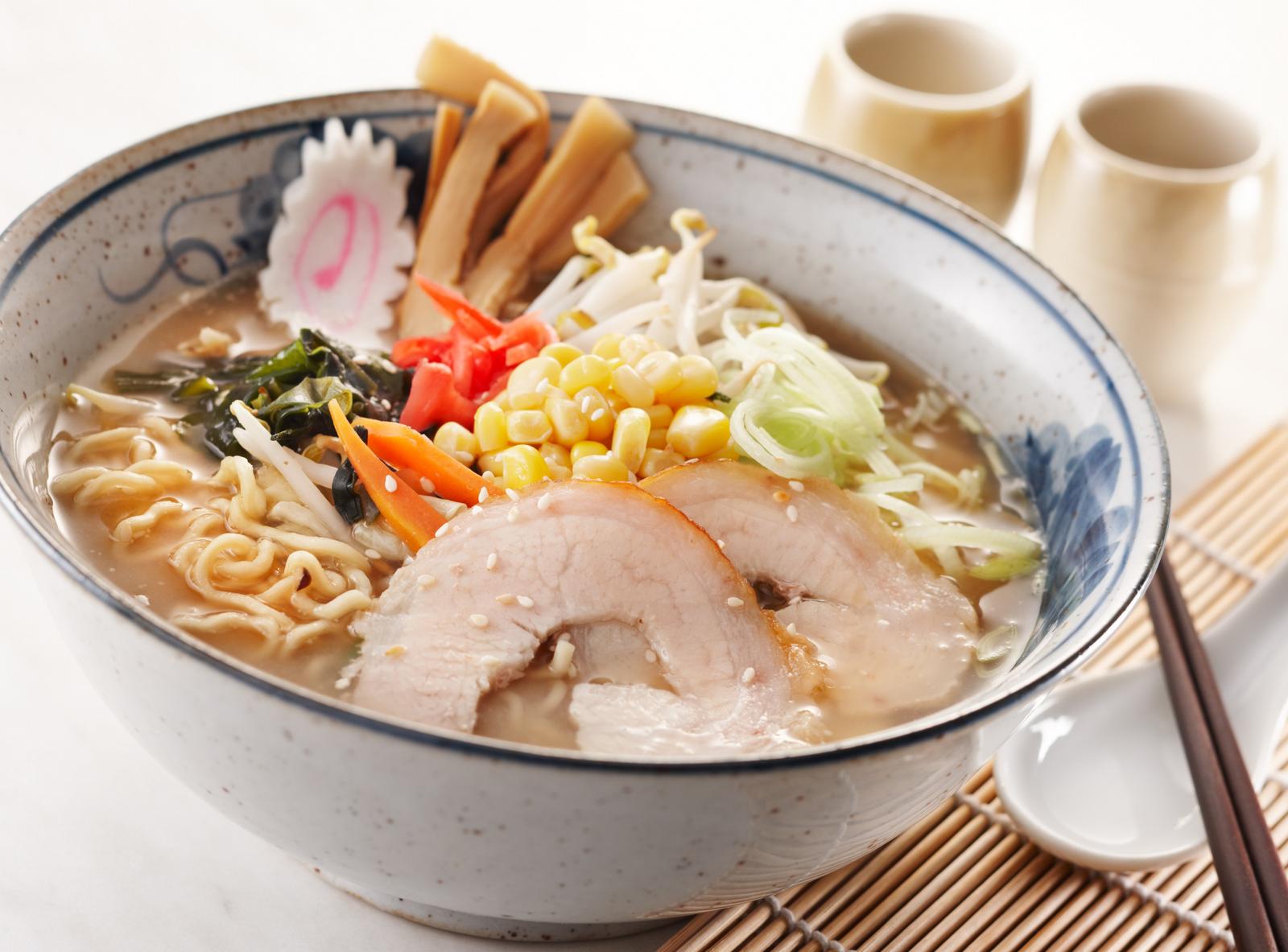
Salt ramen broths are believed to be the most traditional of the four ramen stocks. It is a light, clear broth (generally a pale yellow or brown in colour) made by boiling chicken bones, pork bones, vegetables, fish, and/or seaweed in water until the flavours diffuse, and then seasoning with plenty of salt. This is an excellent broth for the lighter flavours of chicken meatballs and kamaboko fish cakes.
Shoyu, or soy sauce ramen
Another more traditional stock, shoyu broth is also clear, but a darker brown colour than shio broth, and is made from a stock of chicken and vegetables, and/or sometimes beef or fish, seasoned with plenty of soy sauce. It is sweeter in flavour than shio stock, and is well suited for adding plenty of spices like chilli, Chinese spices, and black pepper. The noodles served with shoyu ramen are usually wavy, and sometimes beef is served for garnish instead of chashu pork.
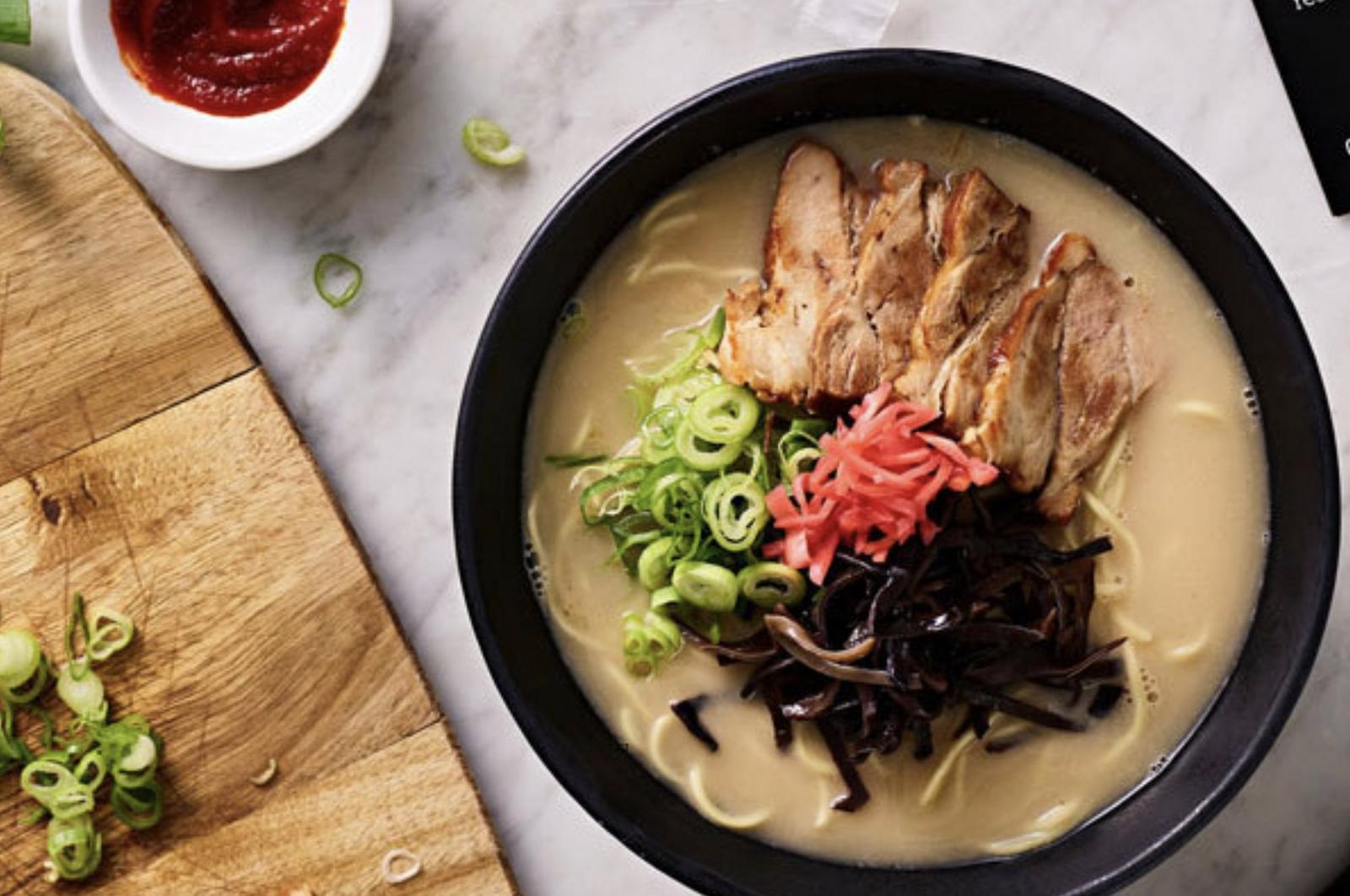
Tonkotsu, or pork bone ramen
Originating from Hakata, tonkotsu broth is made by boiling pork bones for 12-15 hours, until all of the collagen from the bones has dissolved. The stock is cloudy white with a creamy, milk-like consistency and a hearty, rich pork flavour. This broth will usually be combined with a little shio stock or soy sauce stock. It is typically served with thin, straight noodles and works well with refreshing toppings that cut through the richness of the broth, such as pickled ginger and spring onions.
Authentic Shoryu Ramen Hakata Tonkotsu noodles in an instant. The recipe of this instant ramen has been worked on over 9 months with the careful oversight of Shoryu's Exceutive Chef Kanji Furukawa.
Shoryu Ramen
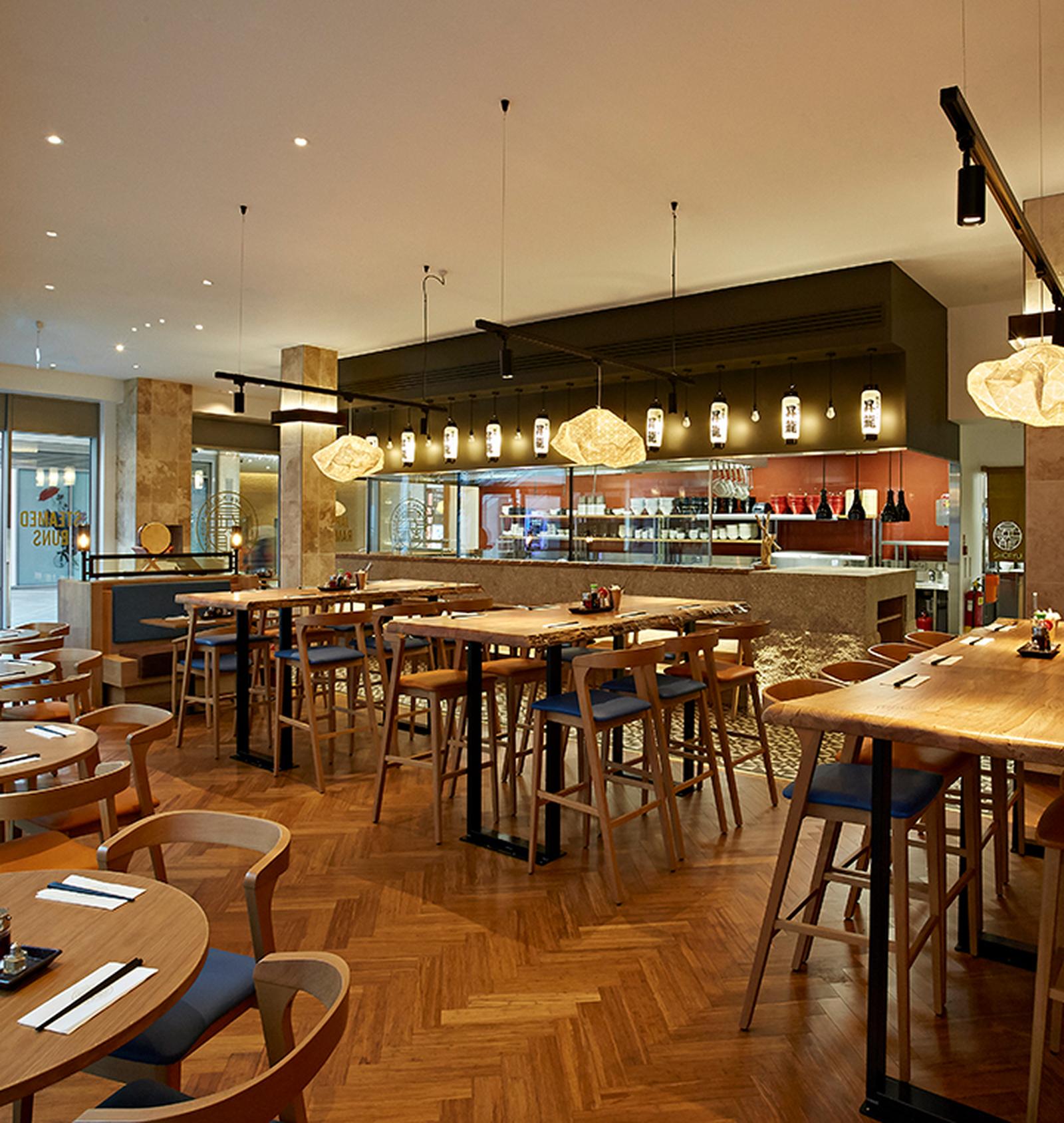
From the team behind Japan Centre, Shoryu Ramen launched in November 2012 and has been recommended in the Michelin Guide 2014 and 2015. Shoryu Ramen specialises in Hakata tonkotsu ramen from the Hakata district of Fukuoka city on the southern island of Kyushu, Japan. Hakata tonkotsu ramen is a style of ramen made with a thick, rich, white pork soup and thin, straight ramen noodles. Our Hakata tonkotsu ramen recipe has been specially created by our Executive Chef Kanji Furukawa who was born and raised in Hakata, to provide the UK with highly crafted, genuine tonkotsu rarely found outside Japan. Shoryu's owner Tak Tokumine is also a native of Fukuoka city and along with Kanji is dedicated to championing his hometown’s local speciality.